
ANTENNA STABILIZATION
Self-Contained, Solid State, Internal Electronics
with Exceptional Low Noise.
Antenna Stabilization
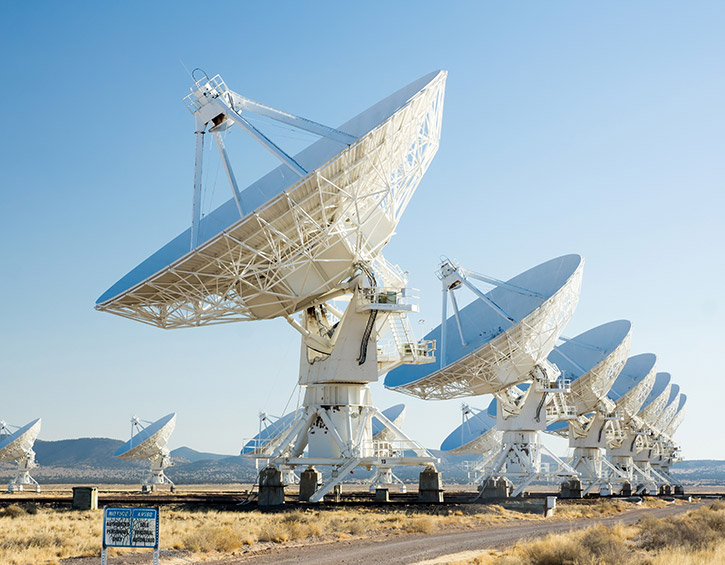 Gyroscopes play a critical role in antenna stabilization to ensure that communication, radar, and satellite antennas maintain precise orientation despite motion, vibration, or environmental disturbances. Stabilized antennas are essential in maritime vessels, aircraft, mobile ground vehicles, and spacecraft, where platform movement can degrade signal quality, reduce tracking accuracy, or interrupt data transmission.
The a gyroscope’s core function in antenna stabilization is to measure angular velocity — how fast the antenna or its supporting platform moves and in what direction. This data allows the stabilization system to detect unwanted motion and compute compensatory adjustments in real time. Micro-Electro Mechanical System gyroscopes (MEMS) are commonly used in compact systems, offering small size, and low weight and power consumption. Fiber Optic Gyroscopes (FOGs) are employed in high-precision applications that require low drift and long-term stability.
In practice, gyroscopes are integrated into Inertial Measurement Units (IMUs) that often include accelerometers to continuously monitor and measure the platform’s angular and linear movement. This information is fed into a control system that commands motors or actuators to adjust the antenna’s orientation, keeping it accurately aligned with a target satellite, radar beam, or communication source. By doing so, the system compensates for platform pitch, roll, and yaw, maintaining stable pointing and optimal signal transmission/reception.
Gyroscope-based stabilization is especially important on dynamic platforms such as ships navigating rough seas, aircraft experiencing turbulence, or vehicles moving over uneven terrain. In satellite communication, gyroscope data ensures that antennas maintain a continuous link with orbiting satellites – critical for broadband, military, or remote-sensing operations.
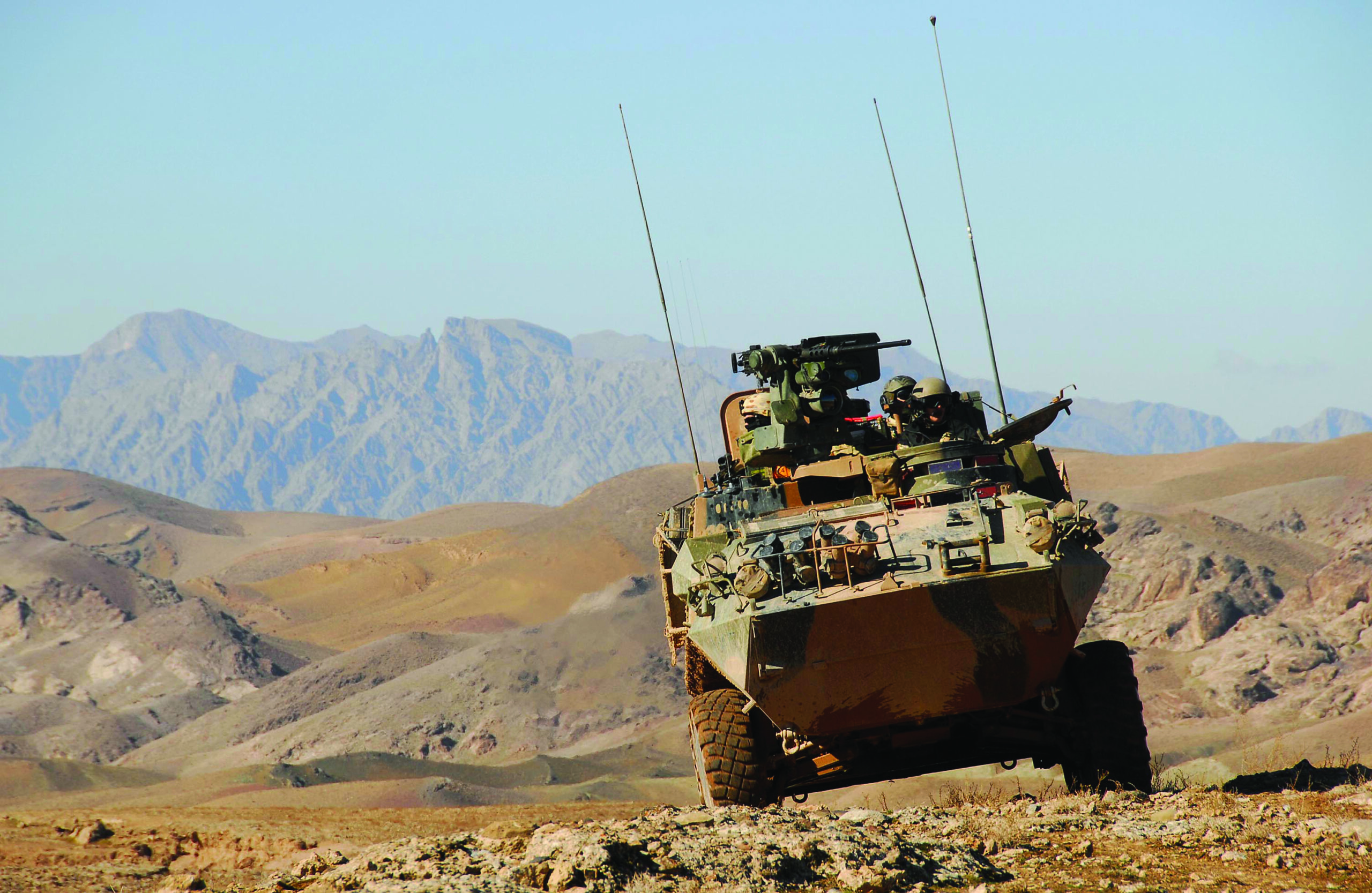 Advanced gyroscopes, like FOGs and high-end MEMS devices, provide precise, reliable, and maintenance-free performance, making them ideal for long-duration or mission-critical applications.
Actively pointing an antenna at a defined fixed position requires absolute roll, pitch, and azimuth-sensing capability. To achieve his objective, outstanding bias stability, exceptionally low noise, and high vibration resistance with low Random Angle Walk values are needed.
EMCORE manufactures Quartz Micro-Electro Mechanical System (QMEMS) gyroscopes which are superior to silicon-based MEMS, and are much more stable and accurate.
EMCORE’s compact and lightweight high-performance QMEMS SDG-1400 and QRS-116 gyroscopes, along with EMCORE-HawkeyeTM Series Fiber Optic Gyros (FOGs) and TAC-450 FOG IMUs provide excellent performance characteristics for radars, antennas, and flight controls.
EMCORE Benefits Critical to Customer Requirements:
- Exceptional Low Noise
- Wide Bandwidth
- Self-Contained Systems
- Compact, Rugged Design
- High Reliability, Long Life
- Solid State, Internal Electronics